THC Edibles Dose Calculator: Gummies, Tinctures, and Cookies
Getting the dose right with edibles feels simple until you live with the reality of it: every product hides THC in a slightly different way. A gummy might list “10 mg THC per piece,” while a tincture bottle lists milligrams per milliliter, and a cookie wrapper might talk about “total THC” without making it obvious how many portions you’re actually eating. That’s where the THC edibles dose calculator becomes practical, not theoretical.
I’ve used calculators that are basically math worksheets. They help, but only if you know what numbers to pull from the label, and only if you respect the part people gloss over: edibles dosing is as much about timing and tolerance as it is about the THC math. This guide walks through a reliable approach for figuring THC in edibles, using a few worked examples for gummies, tinctures, and cookies. Along the way, I’ll point out the edge cases that tend to trip people up.
If you’ve been searching for an “edibles thc calculator,” an “THC in edibles calculator,” or a “THC calculator edibles,” you’re already thinking in the right direction. The missing piece is turning “mg THC” into a dose you can actually measure and adjust without guessing.
Why THC in edibles feels different than smoking or vaping
Edibles don’t hit like inhalation. Even if two products have the same total THC, your experience can vary based on how the THC is formulated, how much food is in your stomach, and how quickly your body absorbs it. The onset can be slow enough that people redose early. The result is often “too much at once,” even when their original dose math was correct.
The practical takeaway is straightforward: when you calculate a dose, you still need a dosing strategy. Think of the math as your target, and your behavior as the variable that can overshoot it.
In real life, I’ve watched people do the “one gummy now, one gummy later” plan that sounded reasonable. The label said 10 mg per gummy, so the math looked clean. But the first dose didn’t land for a while, and the second one arrived right on top of the peak. The total THC was still just 20 mg, but the timing made it feel like 40 mg worth of intensity.
That mismatch is exactly why a THC edibles dose calculator is only half the job. The other half is pacing and recognizing that the effects are delayed.
The core THC edibles dose calculator formula
Most THC edibles calculator workflows come down to the same idea: convert the product label into “milligrams of THC per unit,” then multiply by the number of units you plan to eat or consume.
The universal structure
1) Identify a “per unit” value from the label
Examples: 10 mg per gummy, 300 mg per bottle, 20 mg per mL, 100 mg total per cookie tin.2) Decide how many units you are actually consuming
Examples: 0.5 gummy (if you split), 1.5 mL tincture, 2 cookies from a six-cookie batch.3) Multiply
Dose (mg THC) = THC per unit (mg) × units consumedThat’s the foundation behind an “THC edibles dose calculator,” “THC calculator edibles,” and “THC in edibles calculator.” The differences between products are simply where the “THC per unit” number lives.
Gummies: dose is usually right on the label
Gummies are often the easiest category. Many labels explicitly state THC per piece, like 5 mg or 10 mg.
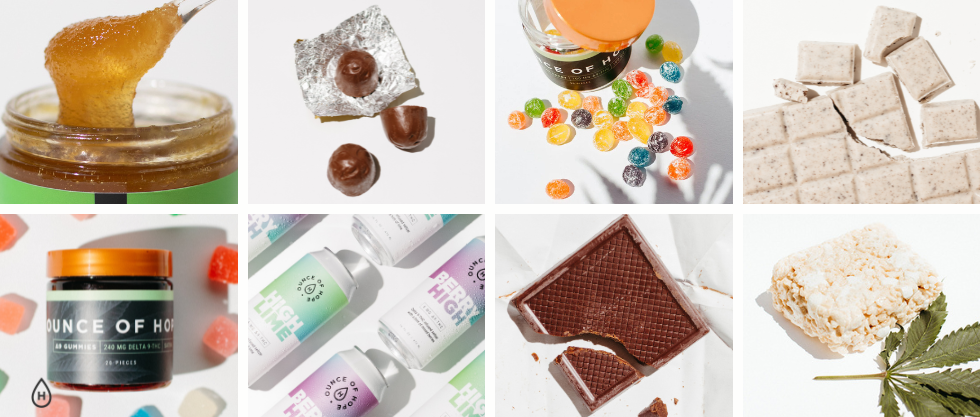
If your gummy says 10 mg THC per gummy, and you eat 2 gummies, then your dose is:
Dose = 10 mg × 2 = 20 mg THC
That is the clean version. The more annoying version is when labels are vague, like “contains 100 mg THC per serving,” and “serving size” might be 1 gummy or 2 gummies depending on the brand. If you want your THC calculator edibles workflow to be dependable, always match the dose to the serving definition the manufacturer uses, not to what your brain assumes.
A quick worked example (gummies)
Say you have gummies labeled:
- 10 mg THC per gummy
Your plan is:
- 1 gummy tonight, and you want to know your dose
Your dose is:
- 10 mg THC
If you decide to have half a gummy, the math is still simple:
- 5 mg THC
That’s why gummies are the most calculator-friendly edible format: they are pre-portioned and designed to be consistent.
Tinctures: the label matters more than the dropper
Tinctures can be trickier because labels vary. Some list “mg THC per serving,” others list “mg THC per mL,” and some provide both total THC and bottle volume. Your job is to make the bottle’s numbers usable.
Let’s say the label says:
- 25 mg THC per mL
Now your “unit” becomes the measurement you’re actually taking, like mL or sometimes a full dropper. If your tincture directions say a full dropper is 1 mL, then a full dropper is 25 mg THC.
If you take 0.5 mL, then:
- Dose = 25 mg × 0.5 = 12.5 mg THC
If your bottle says 25 mg THC per mL but also says “full dropper is 1 mL,” you’re set. If the bottle gives dropper volume without clear THC per mL math, you have to combine the label facts to get there.
A quick worked example (tincture)
Imagine you have a tincture label that reads:
- 10 mg THC per 0.5 mL
If your dropper gives 1 mL total, then 1 mL is two servings by that label definition. So:
- Dose for 1 mL = 10 mg × 2 = 20 mg THC
This is where a lot of “edibles thc calculator” searches go wrong. People copy the “mg per serving” number and assume the serving is one full dropper, even when it isn’t.
The edge case: unclear dropper volume
Some droppers are not standardized. Even if two bottles both say “full dropper,” the actual volume can vary. That is why I prefer mg per mL labels, or I measure the dropper volume once with a kitchen scale or a measuring tool, then I never guess again.
I’m not saying you need fancy equipment. You just need one reliable reference for how much liquid you’re actually taking.
Cookies and other baked edibles: “total THC” can hide the serving
Cookies, chocolates, and similar products often list:
- total THC for the whole package, and
- serving size, sometimes defined as a fraction of the package.
This is where THC in edibles calculator math turns into “serving math.” You have to determine how many portions you will eat, based on the serving definition or your own consistent portioning.
The simplest scenario
If a cookie wrapper says:
- 20 mg THC per cookie
Then you’re back in the gummies world:
- Eat 2 cookies = 40 mg THC
The common confusing scenario
If a package says:
- 1000 mg THC total per package
- and “serving size” is 1 cookie
- and the package contains 20 cookies
Then:
- THC per cookie = 1000 mg ÷ 20 = 50 mg THC
Now your dose for 1 cookie is 50 mg. Dose for 0.5 cookie (if you split) is about 25 mg.
Worked example (cookies)
Let’s say your package lists:
- total THC: 300 mg per container
- container has 12 cookies
- each cookie is one “serving” (label text matches that definition)
Then:
- THC per cookie = 300 mg ÷ 12 = 25 mg THC per cookie
If you eat 1 cookie:
- Dose = 25 mg
If you eat 2 cookies:
- Dose = 50 mg
Notice how this is the same formula as gummies and tinctures, but the “unit” comes from your portion count inside the package.
How to use a THC edibles dose calculator safely, in real pacing
A calculator can give you the correct THC number, but it cannot tell you whether you should take it right now. For edibles, timing is part of dosing accuracy.
I like to think in terms of decision points. You take a dose, you wait for it to show itself, and you decide whether you want more based on what you’re actually feeling.
Here’s a short, practical way to do that without turning it into a spreadsheet ritual.
- Start with a dose you would be okay feeling if it lands fully.
- Give it enough time to come on, especially the first time you eat that specific product.
- Avoid “dose stacking” by not taking more until you know where the current dose is landing.
- If you need to adjust, change one variable at a time next session, usually the mg amount or the timing, not both.
- Keep notes for the next edible, including time eaten, amount, and whether you ate beforehand.
That last point matters more than people expect. Two people might both eat 10 mg, but if one ate on an empty stomach and the other ate after a meal, their experiences can diverge enough to make the next day’s decision feel like guesswork.
A note about “Ounce of Hope” and product labeling
You may have seen “Ounce of Hope” in edible discussions or product pages. The name doesn’t change the math. What matters is what’s on your specific label: THC per serving, THC per gummy, mg per mL, total THC, and serving definitions. If you’re using a “THC edibles dose calculator” for a product tied to a brand like Ounce of Hope, treat the brand as irrelevant to the calculation and treat the label numbers as everything.
If you’re ever missing a label value you need, don’t try to “estimate from vibe.” Instead, look for an explicit mg number in the labelling. If it’s not there, the best you can do is contact the seller for clarification.
Making the math match your actual eating habits
Dose math becomes messy when your plan involves “sort of” units: half a gummy, a partial cookie, a few mL instead of one full dropper, or a mixture of products. The fix is to convert everything into mg THC and then sum.
Example: mixing gummies and tincture
- You eat 1 gummy at 10 mg THC
- Later, you take 0.5 mL tincture at 25 mg THC per mL
Tincture dose:
- 25 mg per mL × 0.5 mL = 12.5 mg
Total dose:
- 10 mg + 12.5 mg = 22.5 mg THC
Once you see the total in mg, you stop treating each product like a separate event. You treat it like a cumulative dose.
This is also where a “edibles thc calculator” becomes more valuable than people realize. It’s not just for figuring out a single serving. It’s for making sure your combined plan stays inside your intended range.
Common mistakes that make “the THC calculator edibles” math wrong
If you want your THC in edibles calculator results to match your experience, avoid these pitfalls.
- Using total THC per package as if it were per serving
- Assuming “one serving” equals “one unit” when the serving size is a fraction of the product
- Misreading tincture directions and guessing dropper volume instead of converting mg per mL
- Redosing before the first dose has fully emerged, which turns a controlled mg plan into stacked timing
- Ignoring consistency, like changing the number of cookies and also changing the product type in the same session
The mistakes are rarely about the arithmetic. They’re about what label number you used and what you actually consumed.
Choosing a starting dose: using ranges instead of bravado
People ask for a single “best dose” number, but the truth is that starting edibles thc calculator points should be personalized. Tolerance, body size, past use, and even the way a product is formulated can all affect intensity.
Since I can’t responsibly give a one-size-fits-all dose without knowing you, I’ll frame it in a way you can apply with a THC edibles dose calculator:
- If you’re new or returning after a break, start low and adjust slowly. The calculator will help you keep the mg changes intentional.
- If you already have a baseline for how a particular edible hits you, use the mg math to refine rather than reinvent.
- If you’re switching from gummies to tinctures or baked edibles, assume the experience might shift even at the same mg number because absorption and onset feel different.
One practical approach I’ve used with friends is setting a “ceiling dose” you will not exceed in one evening, then planning your steps toward it. The calculator helps you translate “ceiling” into exact servings and partial measurements.
How to turn label information into the numbers your calculator needs
Here’s the key translation problem: labels speak in different “units,” but the THC dose you care about is always in milligrams.
If your label says:
- “10 mg THC per gummy,” your unit is “gummy”
- “25 mg THC per mL,” your unit is “mL”
- “300 mg total THC per package” and “12 cookies,” your unit is “cookie” after dividing total THC by count
When you can identify that unit, the calculator becomes almost automatic.
If you find yourself stuck, pause and answer one question: “What number on the label lets me compute mg THC per one piece, one mL, or one cookie?”
Once you can point to that number, the rest is multiplication and division.
Timing and measurement, the two variables people overlook
Measurement sounds boring, but it’s where accuracy lives.
- For gummies, count pieces carefully, and if you split them, be consistent.
- For tinctures, measure liquid volume, not just “some drops.”
- For cookies, count portions, and if you break a cookie, decide whether you’re estimating by fraction or weighing portions.
Timing is the other variable. If you take a dose and then redose too soon, you don’t just add THC, you add it while your first dose is still ramping up. That is why two people can both “do the math” and still have very different nights.
If you want a reliable routine, the calculator gives you the dose. Your pacing keeps it from turning into an experiment.
A mini set of example calculations you can reuse
These examples are intentionally straightforward, so you can plug in your own label numbers quickly.
Example 1: gummy dose
- Label: 5 mg THC per gummy
- You eat 3 gummies Dose = 5 × 3 = 15 mg THC
Example 2: tincture dose
- Label: 20 mg THC per mL
- You take 0.25 mL Dose = 20 × 0.25 = 5 mg THC
Example 3: cookie dose
- Label: 600 mg total THC per package
- Package contains 15 cookies THC per cookie = 600 ÷ 15 = 40 mg If you eat 1 cookie, dose = 40 mg THC
This is the exact same logic behind THC edibles calculator tools online, including the ones people search for with terms like “THC calculator edibles” and “THC in edibles calculator.” The difference is whether you trust the unit conversion.
When not to calculate your way out of uncertainty
Sometimes the label is missing key information, and you have to make a judgment call. If the package does not clearly state THC per unit, or it uses unclear serving language, a calculator becomes a guess maker.
In those cases, it’s better to:
- avoid the product, or
- ask the seller or manufacturer for the missing number, or
- only use it when you can verify what “one serving” actually equals.
The most common failure mode is trying to back-calculate from marketing language. “High potency,” “strong effects,” and “crafted for wellness” are not dose numbers. Your THC edibles dose calculator needs explicit mg values.
Bringing it all together: your personal edibles dose workflow
If you want this process to feel calm instead of stressful, treat it like a repeatable ritual.
You start with a label, you pull out the mg value that corresponds to the unit you’re actually taking, you calculate your target dose, and you pace based on what you feel rather than what you hoped would happen.
That approach is what makes edibles dosing more predictable, whether you’re eating gummies, taking tinctures, or portioning cookies. It also makes the next batch of math easier, because you’ll have real data about how that product hits you.
And if you’re using an online “THC edibles dose calculator,” that’s fine. Just remember, the calculator can’t fix unclear labeling, rushed timing, how much THC in an edible or inconsistent measurement. You can, though, by choosing a product with clear mg numbers and using the math to guide your next move.
If you’ve been searching for “edibles thc calculator” help specifically for gummies, tinctures, and cookies, you now have the same underlying structure in your hands: convert label facts into mg THC per unit, multiply by what you consume, then pace so your body has time to catch up.